01 / Areas
Seven research areas
We research optical fibres and the sensors and devices we make from them, from fibre microfabrication to interrogation electronics. Choose an area for a short description and a list of publications.
Fibre-optic sensors
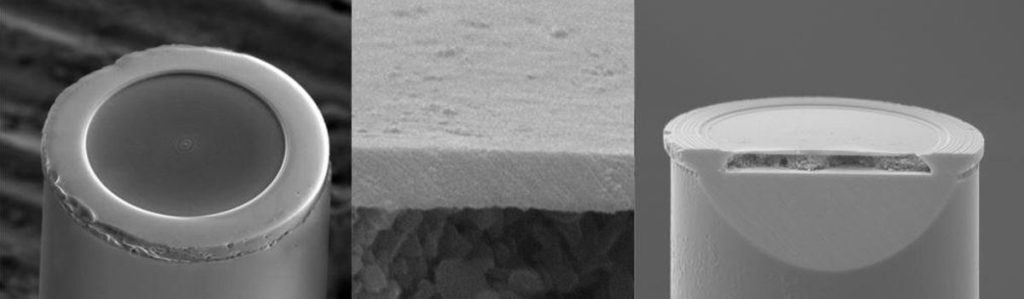
Miniature sensors made on or in an optical fibre for measuring pressure, temperature, strain, refractive index, bending and twist. We also develop distributed and quasi-distributed systems that measure along the entire fibre.
Optical fibres and passive optical devices
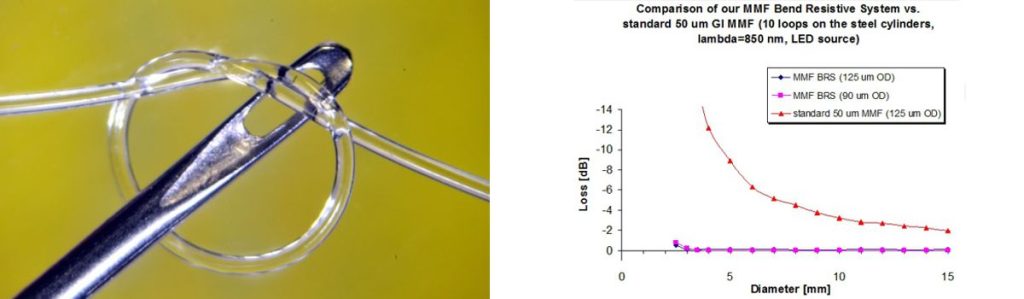
Low bend-loss fibres, multimode fibres with low differential mode delay and other special fibres. From them we make passive fibre devices such as in-fibre semi-reflective mirrors and higher-order mode filters.
Microfabrication
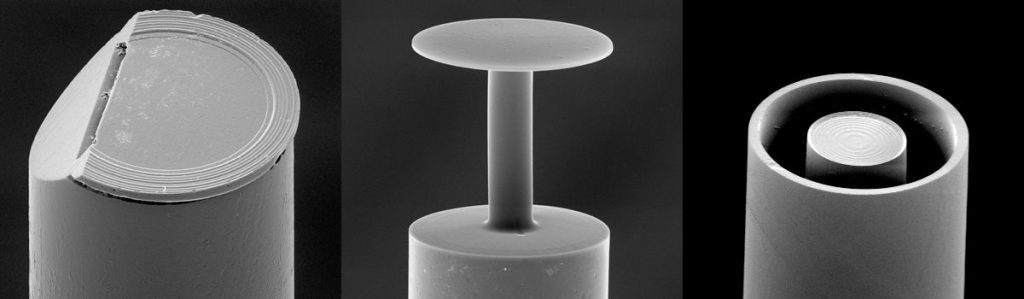
Microfabrication of optical fibres by selective etching (phosphorus pentoxide doping) and with a focused ion beam (FIB). This creates microcells, membranes and cavities directly on the tip or inside the fibre.
Optoelectronics and interrogators
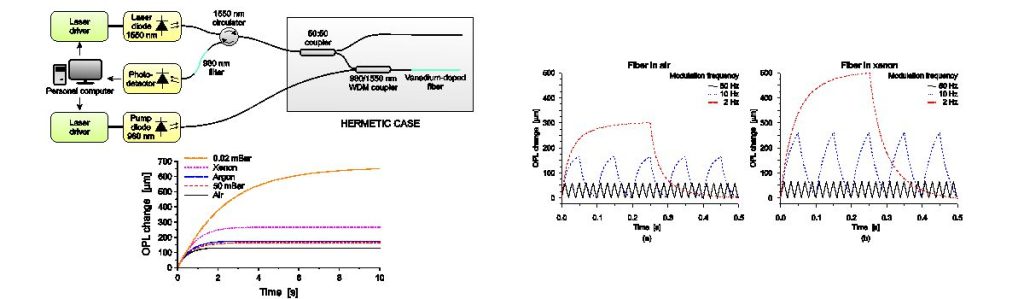
Interrogation systems for optical sensors: fast wavelength sweeping of standard telecom DFB laser diodes, interrogation of Fabry–Pérot sensors and fibre Bragg gratings, and sensitive receivers with avalanche photodiodes.
Optical actuators
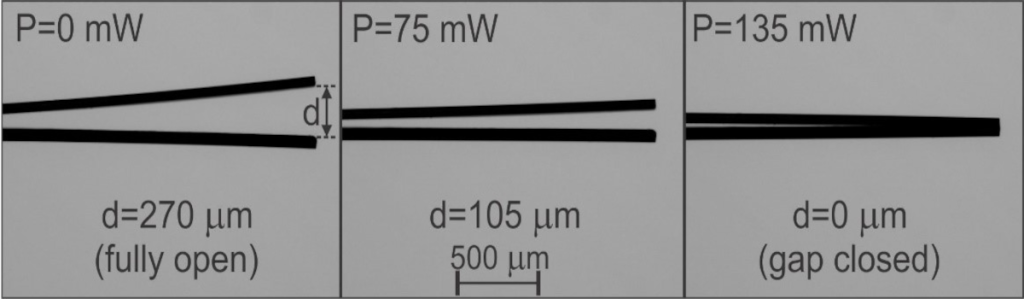
Microactuators driven by light delivered through an optical fibre, such as an optically controlled microgripper for objects smaller than a millimetre and the ROTMO opto-thermomechanical oscillator.
Microfluidics and optofluidics
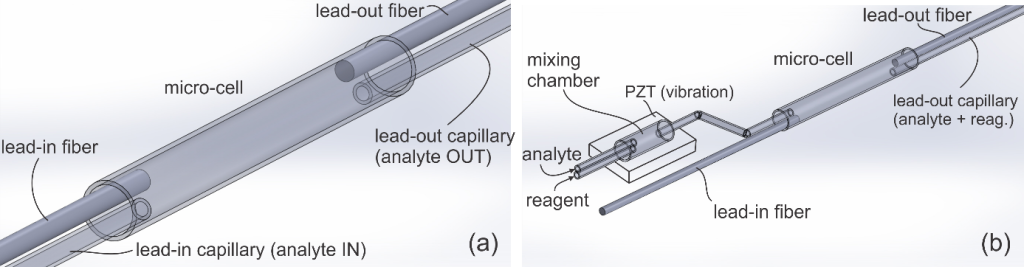
Fibre microcells and fused-silica microfluidic systems for chemical sensing, such as a flow-through fluorescence oxygen sensor and colorimetric sensors, as well as measurement of liquid flow and droplet evaporation.
Other sensors
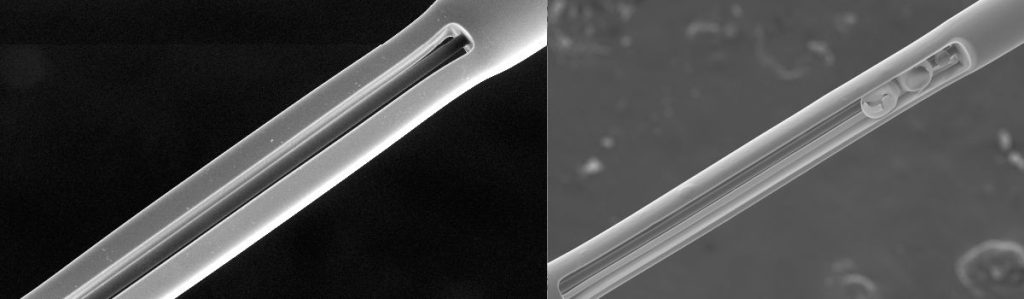
Sensors not based on optical fibres, mainly acoustic liquid level gauges with resonators, as well as estimation of heart rate and blood pressure from the photoplethysmogram.
02 / Video library